
AI video
Shots are built in focused clips, then assembled into longer sequences as performance and continuity lock.
The current fictional-world reel, three visual essays being realized scene by scene, and the hybrid documentary story shaping the cut. This is where real life and the impossible worlds become one film.
A true story told through a universe that doesn’t exist: real people build a movement around one dog’s presence while three openly fictional worlds test what they believe.
 APPROVED CHARACTER REFERENCE · LION LAGUNA
Lion Laguna is one specific real dog—not a generic French bulldog. Every production image must preserve his face, upright ears, compact build, black coat, and light-brown undercoat and chest markings.
Black. The sound of a collar jingling. A breath.
Fade from black.
“When did you first see Lion?”
ADA VOSS, off camera. Title card: GOD IS DOG.
“Before I was born.”
Cut to MARA VELL. She does not laugh. Hold.
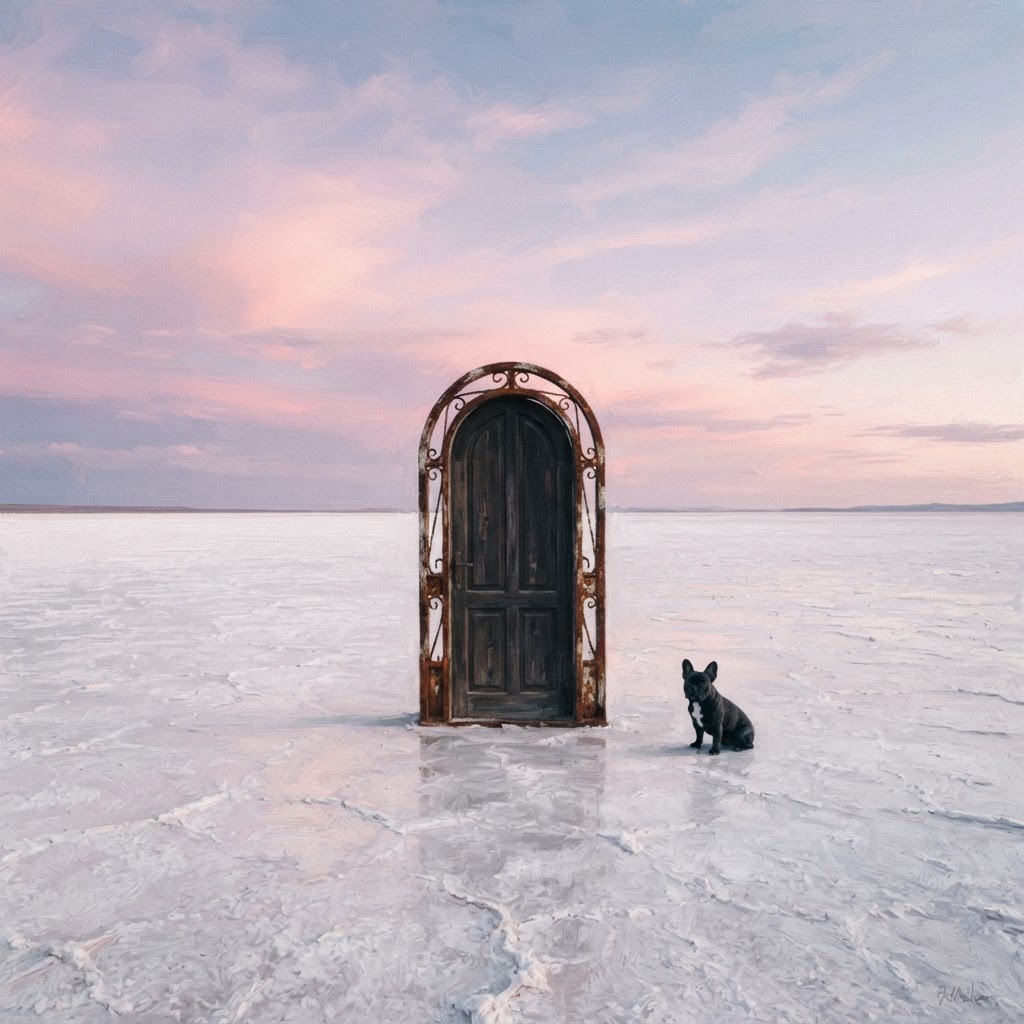
A small black French bulldog before a luminous door on an endless salt plain.
Clip 01. Slow push-in. Film grain. Last pink of evening.
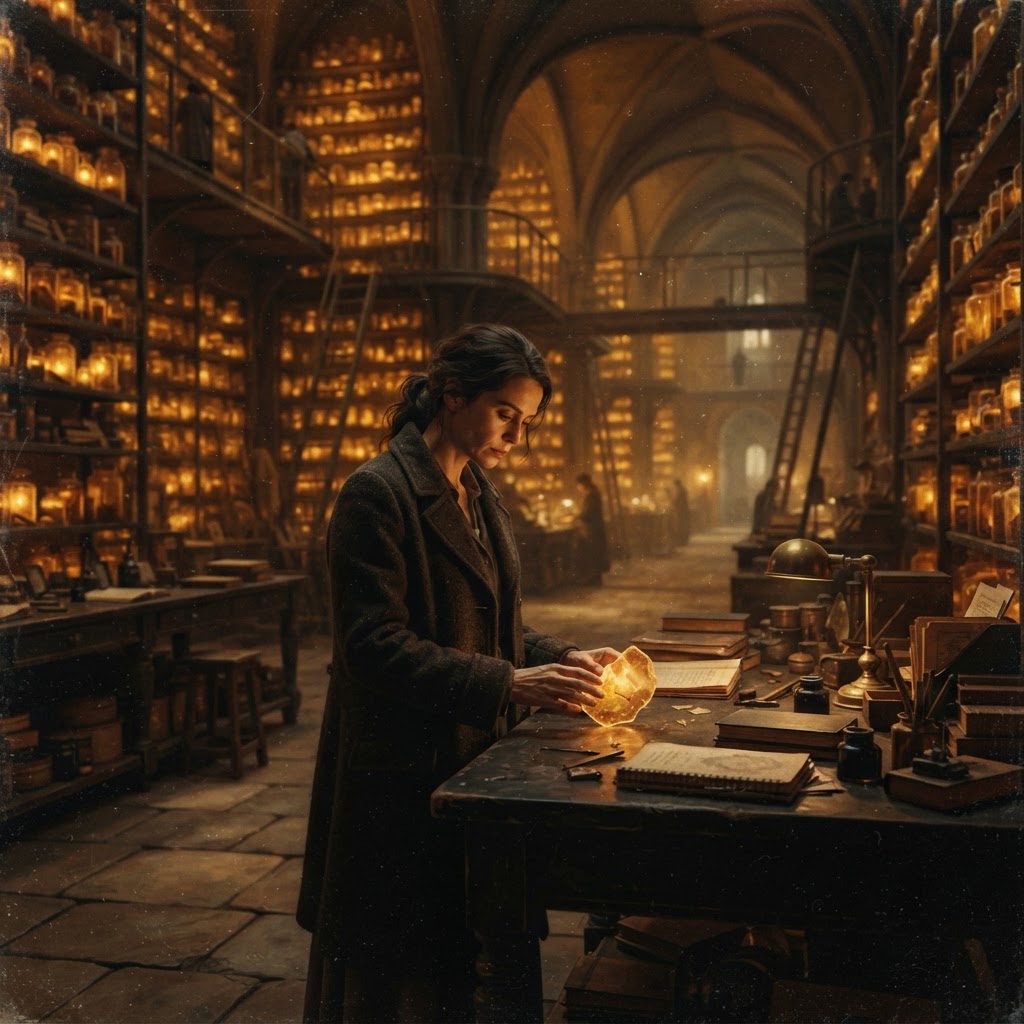
In one world, a memory repairer finds a fragment dated tomorrow.
Clip 02. Amber archive. Dolly.
In a third, a door has been locked for a thousand years.
Clip 03. Lion walks toward the door.
“God has to go outside.”
Lion, preoccupied. Nobody gets an explanation.
GOD IS DOG. A documentary from a universe that doesn’t exist.
Title. Fade.
Each world realized as a scene — key art, close-up, and four beats. The full film, not one chapter.
In a city where memories can be taken apart and repaired, Mara finds a dog carrying a moment that belongs to no one.
Mara closes the last vessel of the day. Amber light. The sound of glass settling. She has restored a thousand memories. None of them were hers.
A vessel is returned without a card. Inside: someone laughing in a garden. Each witness names a different person. Lion recognizes the garden.
Mara lifts the fragment and reads the date. It is tomorrow. Nothing can be remembered before it happens.
For the first time in her career, Mara does not reach for the tools. She reaches for the dog. The question stops being whose. It becomes: what do I owe a memory that isn’t mine?
Key art, visual development, and storyboard frames in sequence—locking performance, rhythm, and composition before each shot moves into motion.
“When did you first see Lion?” — Ada Voss, off camera.
Shots are built in focused clips, then assembled into longer sequences as performance and continuity lock.
Storyboard and key art establish composition, character consistency, and palette before motion production.
Working narration shapes timing now; final voice performance arrives later in the production process.